
Why your browser wallet feels like a ticking time bomb — and how a smarter extension can calm that panic
Whoa! That first time you see a dozen approvals in your wallet, your heart skips. Seriously? You think, as gas ticks away and you squint at permissions that look like legalese. My instinct said “this is messy” long before I dug in. Initially I thought all extension wallets were basically the same — cute icons, seed phrases, and a prayer — but then I started testing edge cases and realized how quickly UX choices become attack surfaces, and things got real fast.
Here’s the thing. Browser extensions live in the most exposed part of your stack: the browser. It’s the bridge between web apps and your keys, and that bridge can be brittle. On one hand, extensions give convenience — quick swaps, contract interactions, and DApp logins. On the other hand, that convenience often hides consent fatigue, ambiguous approvals, and unclear network contexts. My experience using multiple wallets taught me this the hard way: a tiny click can grant token approvals you didn’t fully understand.
Okay, so check this out—one of the patterns I keep seeing is approval sprawl. You approve a contract once, and weeks later it’s still able to move tokens. Hmm… that part bugs me. At first I thought revoking approvals would be straightforward, but actually, wait—let me rephrase that: it’s possible, but the UI is often buried and confusing. That friction alone makes users leave risky approvals in place. And when you mix that with phishing pop-ups that mimic approval dialogs, things get hairy, fast.
There are engineering reasons for these problems. Browser extension contexts have limited isolation, and web pages can try to trick the extension into revealing more than intended. Developers sometimes favor seamless flows over explicit checks. On the street, that looks like a polished onboarding, but under the hood there’s coupling and implicit trust. On the other hand, some newer wallets are actually building guardrails that treat approvals as first-class events — prompting for intent, explaining consequences, and offering quick revocation options.
Practical behaviors that reduce risk (and a tool I keep recommending)
Start with process. Always assume every approval will be permanent until you revoke it. Seriously. Use a second account for high-risk interactions and a main account for long-term holdings. When a DApp asks for access, pause. Think: does this contract need unlimited approval or just a one-time spend? Ask yourself: would I sign this if my wallet were under a microscope? My gut says that if you’re rushing, you’re probably making a mistake.
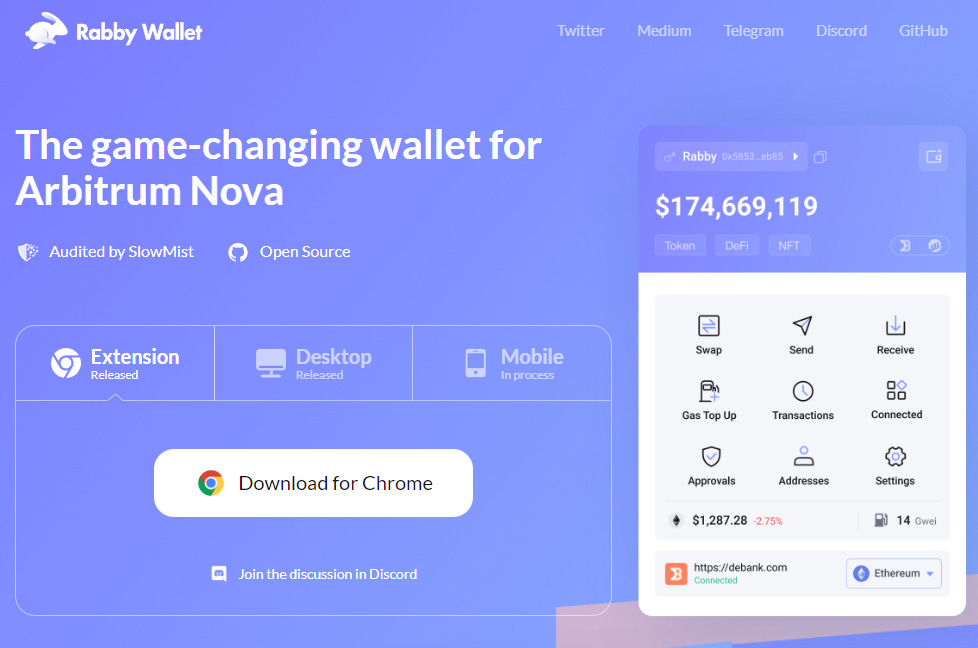
For many of these workflows, a smarter wallet extension helps. I keep coming back to tools that surface approvals, let you batch revoke, and show clear network context. One such extension that earned my trust during repeated audits and real-world use is Rabby — it’s got things I wanted: clear permission dialogs, quick allowance revokes, and multi-account flows that feel deliberate rather than accidental. If you want to try it, here’s a straightforward place to get it: rabby wallet download.
My testing routine is simple. I spin up a clean profile, import a test account, and then purposely interact with risky DApps to see how the extension surfaces the tradeoffs. Sometimes extensions handled it well; sometimes permissions were buried two clicks deep. I noticed patterns: wallets that forced a confirmation modal with clear “allow X until Y” choices led to fewer accidental approvals. Wallets that trusted the page to craft the message? Not great. That’s basic risk design, but it matters.
There’s also the matter of UX that feels secure. Users like smoothness. They like one-click flows. But friction can be protective. Designers need to decide which friction is valuable — not every prompt is a bad thing. For example, re-authenticating on high-risk transactions (like changing allowances or moving large amounts) breaks speed but prevents mistakes. I’m biased, but I prefer a slight interruption that saves my assets than a slick pattern that makes me click through without thinking.
On the technical side, keep an eye on these specifics: are permissions scoped? Can you set spend caps? Does the extension show which contract you’re approving, or just the DApp name? Does it display the chain clearly? Small cues reduce user confusion. Also, check whether the extension supports hardware wallets — integrating a cold signer drastically lowers risk even if the extension is compromised.
Something felt off about many popular wallets’ notification systems. They pile confirmations in a queue and expect you to mentally map them back to their DApp triggers. That mental load leads to mistakes. Better systems group approvals by dApp, show pending allowances, and offer one-click bulk revocation. When I saw Rabby’s allowance dashboard, that was one of the “aha” moments — you can look at all your approvals at once and act. Not sexy, but very practical.
Let’s talk threats for a minute. Phishing pages that imitate wallet popups are common. Browser-level vulnerabilities and malicious extensions are rarer but real. There’s also social engineering on Discord or Telegram that tricks you into pasting a signature. The common thread: trick the user into handing away agency. So, build barriers where they matter — education plus tooling. For example, delay signing if a transaction is abnormal, or present a plain-language explanation of the action. Those are the kinds of UX choices that stop the majority of careless mistakes.
On governance and open-source transparency: trust grows when you can inspect the code and see active audits. But I’ll be honest — I don’t always audit code myself. I’m not 100% sure I could catch every subtle bug. What I do is look for a pattern of audits, active bug bounties, and fast responses to reports. Community responsiveness matters as much as the initial audit results.
FAQ
How do I check which contracts my wallet can spend from?
Open your wallet’s allowance or approvals dashboard and scan the list. If the UI groups by dApp, even better — you can revoke one at a time or in bulk. If your extension lacks this, consider moving assets to a safer account and minimize interactions from the exposed one.
Is a browser extension safe enough for large holdings?
Short answer: probably not ideal. Use hardware wallets or keep cold storage for long-term holdings. Extensions are great day-to-day, but treat them like a hot wallet — fast access, not fortress-level custody. If you must use an extension for larger amounts, pair it with a hardware signer and strict allowance caps.
Can I recover from a compromised extension?
Depends. If your seed phrase or private keys were exposed, move remaining funds immediately and assume theft; you likely can’t reverse transactions. If only permissions were abused, revoking allowances and rotating accounts can limit damage. Prevention is way better than cleanup, though — very very true.
Okay, final thoughts — and I’m trailing off a bit here because this stuff keeps evolving. The practical takeaway is simple: treat your extension like a set of tools, not a vault. Use purpose-built accounts, audit permissions regularly, and favor wallets that make those actions easy. My instinct still says that friction can be friendly; the right prompts save you from the wrong clicks. I’m biased, sure, but after years of poking at these systems, that approach has saved me headaches — and a few transactions that would’ve been costly.